
About
Cornelia Tänzler
I founded CT Advisory & Partners to do one thing properly: advise the people who own, govern and lead family companies.
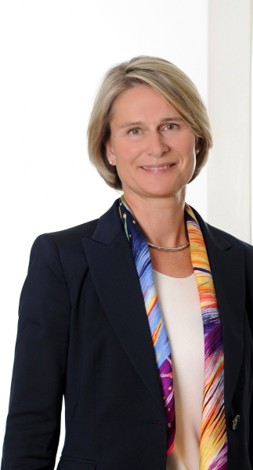
My work sits at the point where a family, a board and a management team meet, where the questions are rarely purely commercial and almost never purely personal. Ownership succession, the chairmanship of a board, the appointment or departure of a chief executive who is also a family member: these are decisions that are made once and lived with for a generation.
I am engaged by the principals themselves. That means the owning family, the chair or the chief executive, rather than a function within the company. It also means the mandate is defined narrowly, held closely, and closed when the question has been answered.
Before founding CT Advisory & Partners in Geneva, Cornelia spent more than thirty years in international executive and board search and leadership advisory, most recently as Managing Director in the Board & CEO practice of Russell Reynolds Associates. She has advised shareholders, chairs and boards of directors on more than 120 senior appointments, including over 50 CEO, Chair and Director appointments.

My purpose
Continuity
What needs to be in place today for the business to thrive tomorrow?
Continuity is not a fourth area of expertise, and it is not something the other three add up to. It is a process that runs underneath all of them.
The distinction matters more than it sounds. A succession is an event: it has a date, an announcement and an aftermath. Ownership is a state: it changes hands, widens across a generation, occasionally concentrates again. Continuity is neither. It is the continuous work of keeping leadership, the board and the family’s ownership aligned with a business and a family that will not stop changing. It is never completed. It is revisited.
Leadership & Succession · Board & Governance · Family & Ownership
Three areas. One continuous process.
A company endures when the right people lead it, when the board and the way decisions are taken allow good decisions to be made, and when the family that owns it is aligned about what it wants the enterprise to be. Remove any one of the three and continuity becomes a question of luck. Keep all three under review, year after year, and it becomes a question of judgement, which is a great deal easier to influence.
How I think about continuity
It is continuous, not periodic. The work does not begin when a transition is announced and end when it is complete. Most of what determines the outcome happens in between, when nothing appears to be urgent. That is when I am most useful, and it is when I am least often called.
It takes a multi-generational view. The question is never only whether an arrangement works now. It is whether it still works when the shareholding has widened, the founder has stepped back, and a generation that did not build the company has expectations of its own.
It is led by the family. My role is to manage the process. The content belongs to the family, and it has to, because a decision a family has reached itself is a decision that holds. An adviser who supplies the answers produces a document. That is not the same thing.
It depends on conversation. Almost everything that goes wrong in a family enterprise was known to someone, early, and not said. Creating the conditions in which the difficult subject can be raised, and raised again next year, without drama, is not preparation for the work. It is the work.
It requires more than one discipline. No single adviser covers law, tax, structuring, governance, leadership and the psychology of a family. Continuity work that stays inside one profession is continuity work that has stopped early. That is why this practice is built as it is.
In a family enterprise, three systems are at work
- Family
- relationships, communication, and a shared sense of purpose across branches and generations.
- Ownership
- rights, responsibilities, expectations, and the readiness of those who will inherit them.
- Business
- strategy, leadership, governance, performance.
These three overlap, and occasionally pull against one another. Most of the difficulty families experience does not originate inside any one of them. It arises where they meet: where a family conversation is settled as though it were a shareholder decision, or a business decision is taken as though it were a family one.
My three areas of expertise follow those systems rather than cutting across them. Leadership and the board belong to the business, which is why governance is treated on its own terms and not as an extension of the family. Ownership belongs with the family, because expectations, alignment and inheritance are family questions long before they are structural ones.
How I work
I take the time to understand the enterprise beyond the business itself, with a transgenerational perspective, and I work with the family as a whole while maintaining a neutral position within it. Every family is different, and understanding and integrating the different perspectives around the table is what makes a decision hold.
That is also why the practice is built as it is. Questions of this kind rarely sit within one discipline, so I bring in the right partner at the right moment, legal, tax, wealth structuring, corporate finance, psychology, independent board membership. From there we work as one team, and I remain responsible for the coherence of the whole. One relationship, and whichever expertise the question turns out to require.
I hold the Family Enterprise Advisor (FEA) designation from Family Enterprise Canada, which brings a formal method to where family, ownership and business considerations intersect.